
Custom ecommerce with AI is worth building when your business rules stop fitting a ready platform's settings: deep integration with the systems you already run, automation that no one has to start by hand, and decisions that depend on your own data. When the rules still fit, a ready platform ships faster and keeps the initial investment smaller.
What is a custom ecommerce
A custom ecommerce is not only a personalized front-end. It is a complete operating system built around your business with three layers:
- Commerce layer: catalog, PDP, checkout, payments
- Operational layer: stock, pricing, promotions, tax and finance rules
- Intelligence layer: recommendations, automations, and sales analysisThe commerce layer is the part we document in the Alto Giro case: ecommerce development and implementation.
When a ready platform stops being enough
Use a prebuilt platform when business rules are simple. Consider custom development when you need:
- Segment-level pricing and special conditions
- Tight integration with internal systems
- Complex order orchestration across channels
- Dashboards that drive daily actions
Ready platform, plugin customization or full development
| Approach | Best for | Advantage | Limitation |
|---|---|---|---|
| Ready platform | Quick launch, low complexity | Fast time-to-market | Limited custom logic |
| Plugin customization | Small feature gaps | Faster than full rewrite | Dependence on plugin updates |
| Fully custom system | Complex operations and integrations | Full control, high scalability | Larger initial investment |
What changes with a custom system
Checkout and payments
- Channel-specific payment flows and anti-fraud rules
- Complex discount conditions with business-specific logic
ERP, inventory and catalog
- Live stock synchronization
- Dynamic product visibility by channel
- Centralized catalog control and workflow
AI in the store
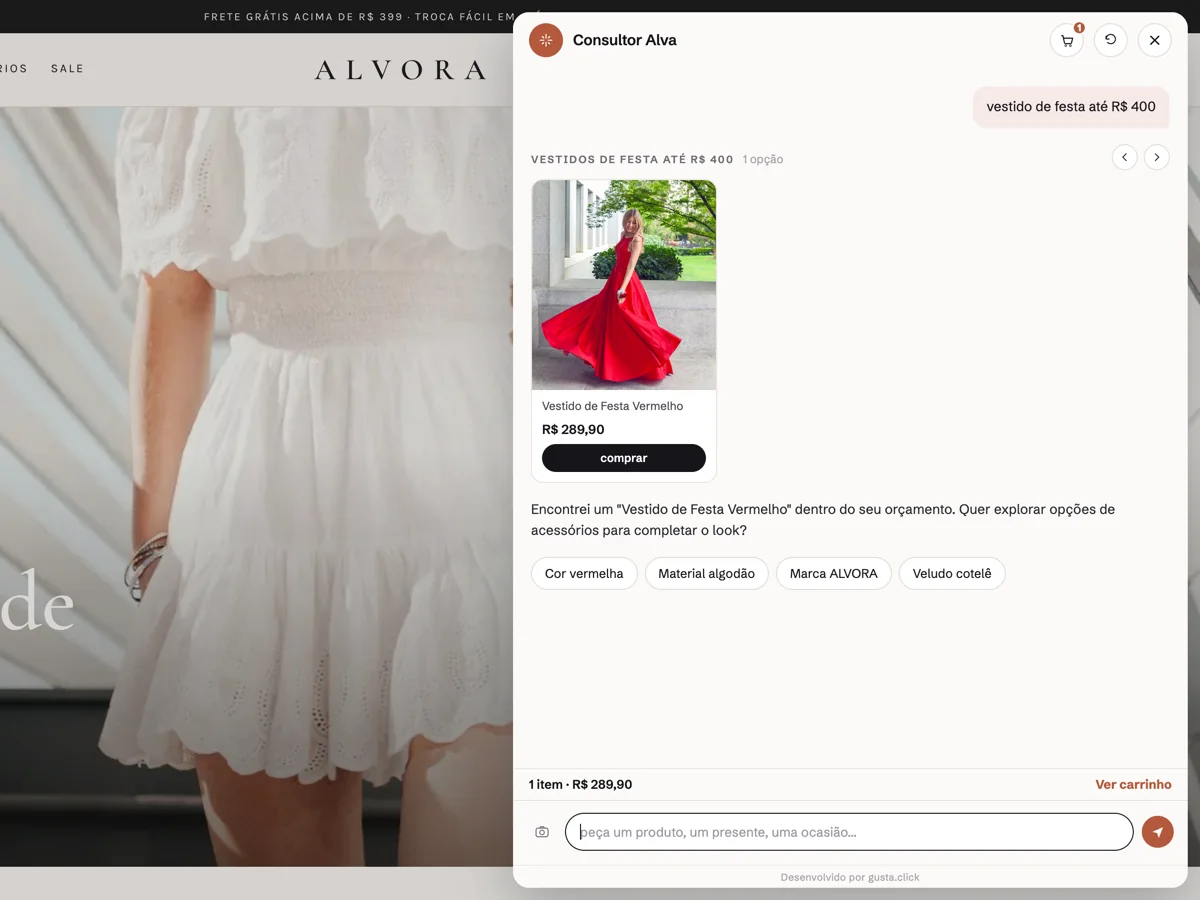
- Product recommendations by context and stage
- Assisted selling and automatic support responses
- Stock prediction and replenishment alerts
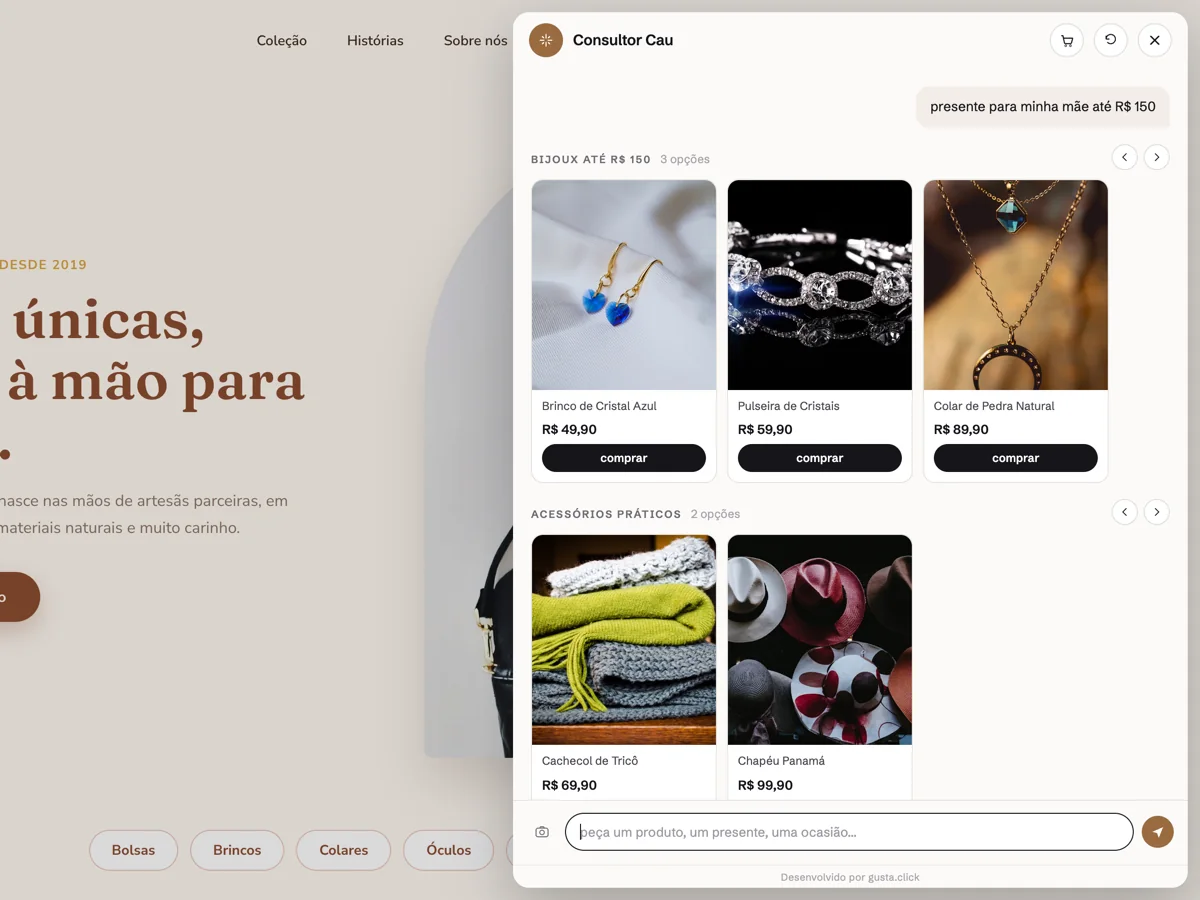
It pays to separate what has to be built from what already exists. Support, recommendation and cart recovery are layers Nola AI, GUSTA's AI sales assistant delivers by connecting to your catalog (VTEX, Shopify, WooCommerce or Magento), without entering the custom project's scope. Stock prediction, pricing and channel rules stay custom development, because they depend on your own data and business logic. Drawing that line early usually shortens the first cycle of the project.
Cost and timeline drivers
| Driver | Effect on timeline | Effect on cost |
|---|---|---|
| Scope and business rules | High | High |
| Number of integrations | High | Medium to high |
| Data migration complexity | Medium | Medium |
| Internal team availability | High | Varies |
If the question goes beyond the store and touches other company processes, the article on custom AI solutions for business helps you decide whether to buy, integrate or build.
Practical decision checklist
- Do you need recurring operational automations not supported natively?
- Is every hour of manual reconciliation generating errors or delays?
- Do channel-specific rules affect price, availability, and commission?
- Is forecasted return positive in 6 to 12 months?
If you answered yes to three or more, request a diagnostic call and map the architecture before scaling.
CTA
Interested in a custom ecommerce roadmap? Ask for a technical diagnostic at Contact. And if support is the most urgent pain right now, Nola AI covers that layer while the larger project is being planned.
Comments
No comments yet. Be the first to comment.