
The difference between an AI chatbot or an AI agent for ecommerce is what each one is allowed to do: the chatbot answers, the agent acts. A traditional chatbot follows menus and a fixed decision tree, an AI chatbot reads free text to explain products and compare options, and an AI agent runs authorized tools that reach inventory, order status and the cart. Each step up in autonomy narrows what the assistant may read: it should receive only the data the current task requires.
The three options
Traditional chatbot
A traditional chatbot follows menus, keywords and fixed decision trees. It is a good fit for opening hours, delivery rules, return policies and other questions with stable answers. The experience is predictable and easy to audit, but it struggles when a customer writes an unexpected question or needs advice that depends on context.
AI chatbot
An AI chatbot understands natural language and can use approved knowledge to explain products, compare options and guide a pre-sale conversation. It is useful when customers ask the same question in many different ways. Its scope should still be explicit: sensitive promises, refunds and exceptions need verified data or human approval.
AI agent
An AI agent combines conversation with controlled tools. It can look up inventory, retrieve an order status, register a lead or prepare a cart, provided each action has authorization, validation and an audit trail. This makes the agent more useful, but also increases the need for governance and testing.
Quick comparison
| Solution | Best for | Main limitation |
|---|---|---|
| Traditional chatbot | FAQ and fixed flows | Limited context and flexibility |
| AI chatbot | Contextual support and product discovery | Needs guardrails for sensitive answers |
| AI agent | Assisted sales and controlled operations | Requires permissions, monitoring and fallback |
Where Nola AI fits
The three options above are usually sold as different products. In practice, what changes is how much the assistant is allowed to decide on its own — and you can start at one level and move up later.
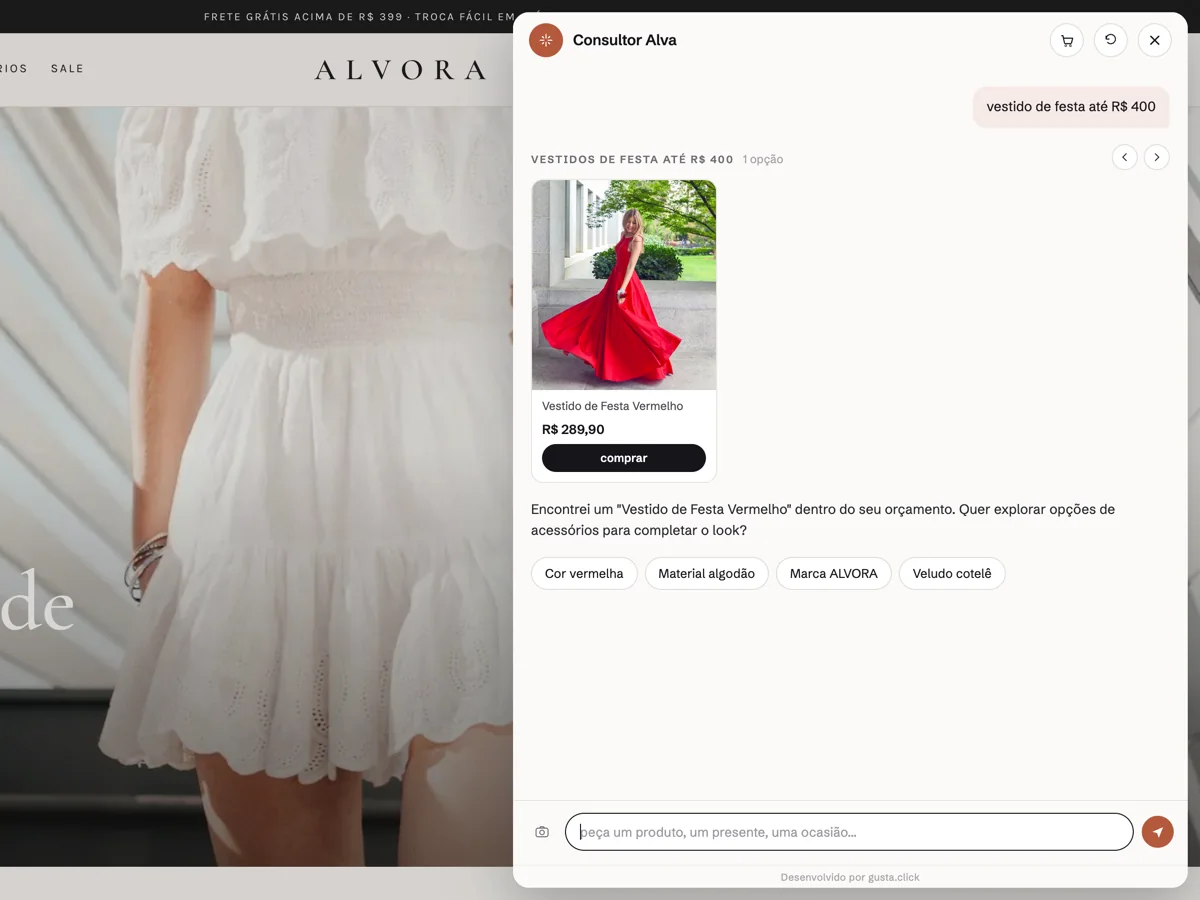
Nola AI is the assistant GUSTA built for that middle ground. It runs in two modes, chosen per store:
- Guided flow: a drag-and-drop flow editor for support that has to stay predictable. It still reads free text, extracts several details from a single sentence and skips questions the customer already answered.
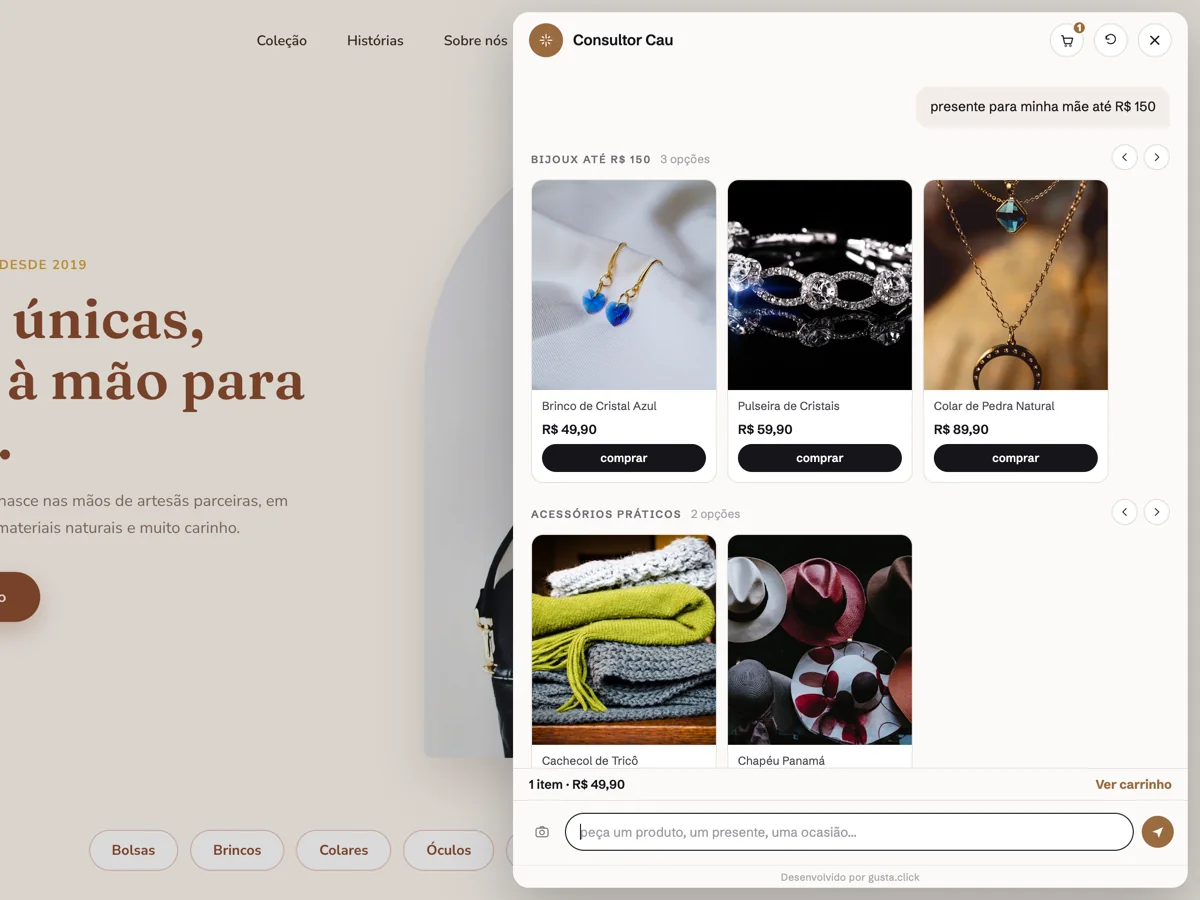
- Assisted shopping: the consultant mode. Fewer questions, more recommendation — it reads the request ("a gift under $200"), suggests options from the catalog, compares them side by side and builds the cart inside the conversation. The difference between the two modes is covered in AI chatbot vs AI personal shopper.
In both modes the answer comes from the store's real catalog. Questions like "the cheapest one", "the most expensive" or "under $200" become a query against the product database instead of a similarity search, which is the difference between an assistant that gets close and one that gets it right. The same logic drives model choice: in which GPT-5.6 model to use for each task, accuracy comes from the data you query, not from more reasoning. When a case falls outside the script, the conversation moves to the human queue in the dashboard with its context attached. That is the design documented in the ENE2ESE case: an e-commerce chatbot with human handoff.
Connecting the assistant to catalog and operations
A useful ecommerce assistant should not invent price, availability or order information. Connect it to the sources that already govern the operation:
- Product catalog, attributes and approved descriptions
- Inventory, pricing and promotion services
- ERP for orders, invoices and fulfillment status
- CRM for lead context, notes and follow-up statusOn VTEX most of that plumbing already exists — see a chatbot integrated with VTEX that queries catalog, shipping and order status.
The conversational layer should receive only the data required for the current task. Writes must be idempotent, authenticated and restricted to explicit actions so that retrying a request cannot create duplicate orders or records.
Pre-sale, post-sale and recovery examples
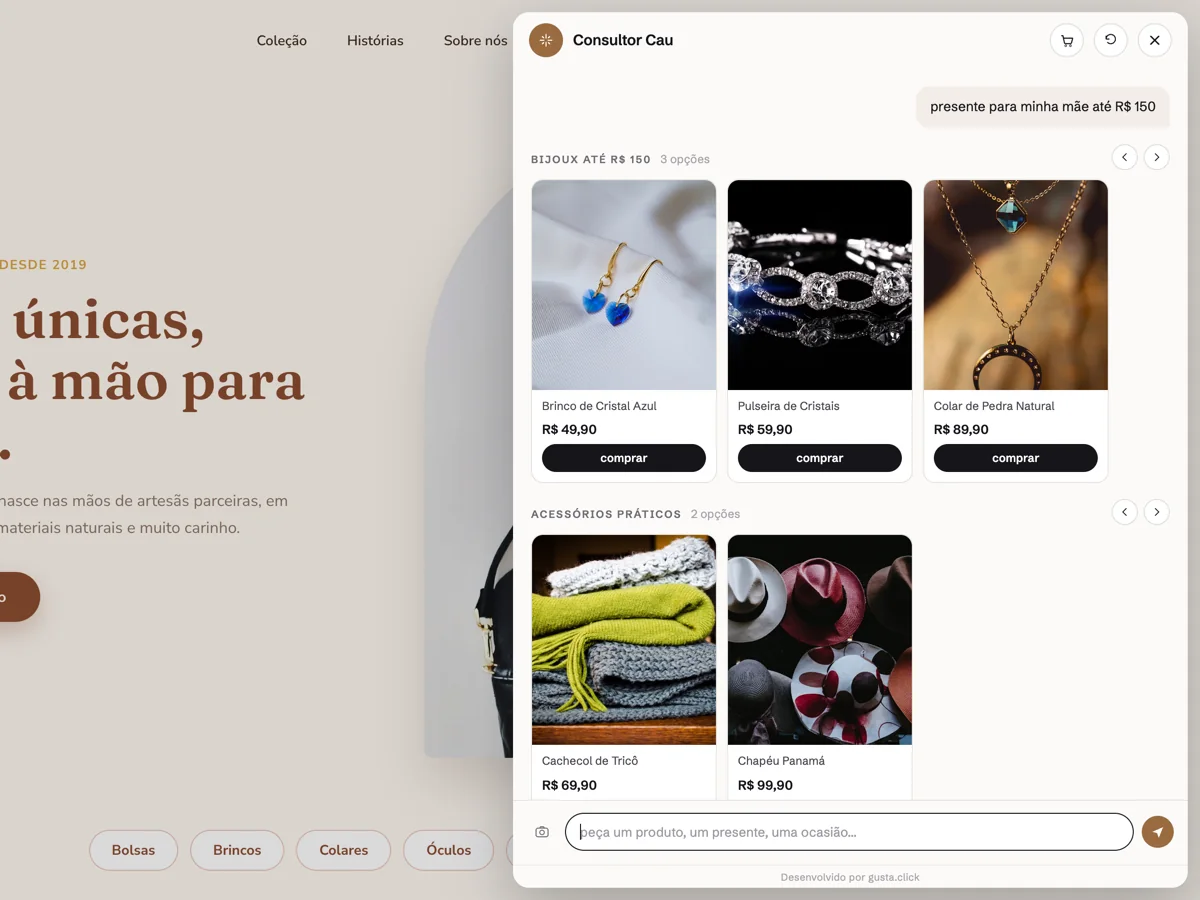
In pre-sale, the assistant can ask about use, budget and preferences before suggesting a small set of products. In post-sale, it can retrieve a verified tracking status and explain the next step without exposing unrelated customer data. For cart recovery, it can resume the conversation with context, but discounts and outbound messages must follow the store's consent and commercial rules.
These scenarios can coexist. A common rollout starts with support answers, adds catalog retrieval, and only then enables operational actions after the team has reviewed real conversations and failure cases.
Human handoff and safety limits
Define escalation rules before deployment:
- A confidence or evidence threshold for factual answers
- Immediate handoff for complaints, legal questions and unusual exceptions
- Permission checks before every action that changes business data
- Logs containing the request, tool result and final outcome
- A clear message when an integration is unavailable
Handoff should preserve the useful conversation context so the customer does not need to repeat everything, while limiting access to the team members responsible for that case.
Metrics that show real value
Track assisted conversion, response time, resolution without handoff, handoff quality, recovered carts and the percentage of answers that required correction. Review metrics by intent rather than relying on a single automation rate: a high automation number is not a success if it hides inaccurate answers or unresolved requests.
The practical split between what the machine handles and what needs a person is covered in human vs AI agents. Before choosing, compare how the market prices these tools in the guide on how much an AI chatbot costs.
CTA
Want to try before deciding? GUSTA's AI sales assistant goes live with a single script tag and comes with a 14-day free trial, no card. If your operation needs custom ERP integration or rules of its own, ask for a conversational system assessment at Contact.
Comments
No comments yet. Be the first to comment.